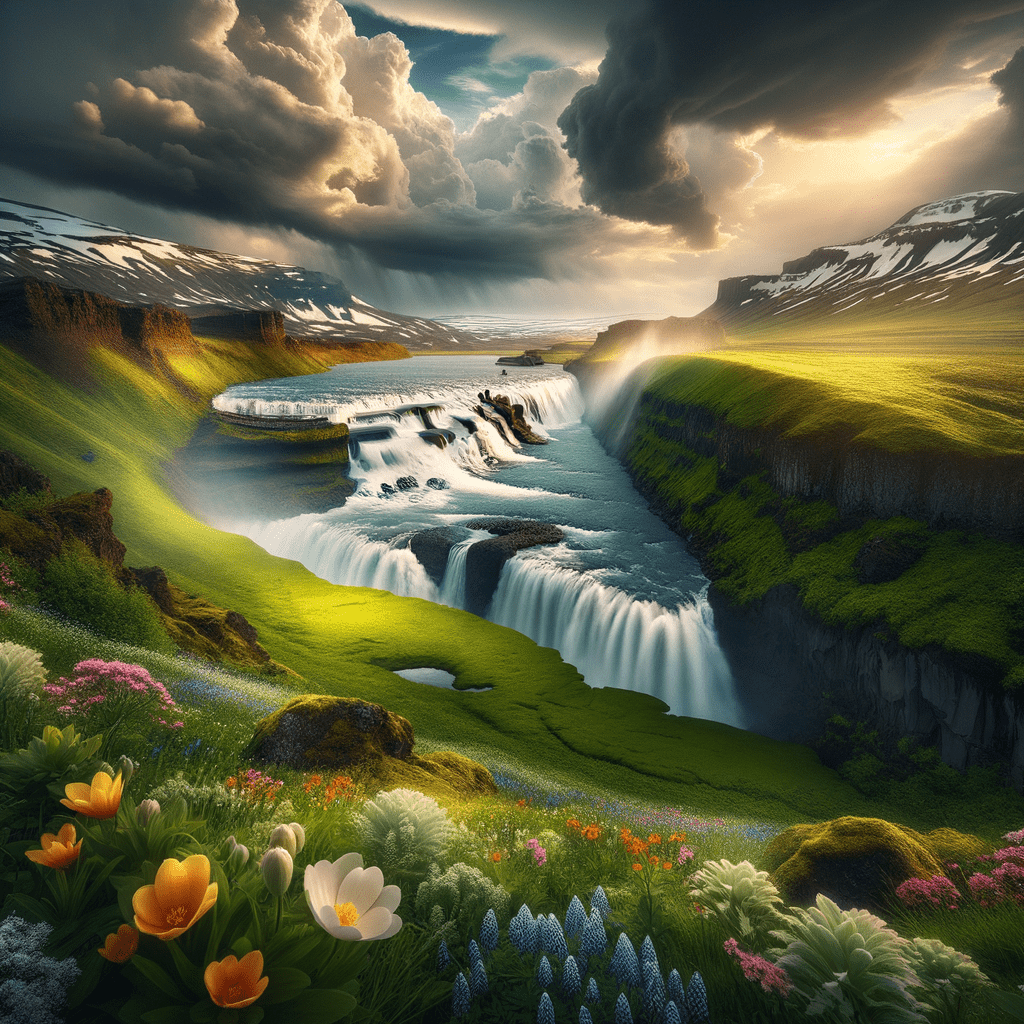

The asphalt ended quickly, followed by four hours of climbing through countless twists on a narrow and bumpy dirt road. We reached a pass, a mountain pass at 2,800 meters.
The scenery changed from rainforests to spruce forests and then to a green alpine meadow without trees.
On the horizon, I saw the rugged cliffs above 4,000 meters of the Caucasus peaks, on the border between Georgia and Russia.
A motorhome malfunction caused me to temporarily part with my mobile home and return to my days as a backpacker.
With a backpack on my shoulders, I went on a long hike in the Caucasus Mountains of Georgia, visiting traditional villages with ancient stone towers, mountain landscapes, fascinating human encounters, and lively meals into the night with tasty dumplings and plenty of local strong alcohol.
My summer journey with the motorhome began in Switzerland heading north to Scandinavia, but during the trip, knocking noises came from the drive shaft.
I stopped at garages along the way to understand the source of the noise, receiving a variety of answers, from “It’s nothing, drive safely” to “You must not continue driving even one more meter.”
Moreover, no garage could take me for a proper inspection immediately. “Come back in two weeks or a month, then we can help you,” I was politely and firmly told.
Traveling with a motorhome is wonderful. It is a minimalist home where I have a double bed for sleeping, a kitchen for cooking, a toilet and hot shower, and a sitting area with a changing view.
All in ten square meters.
I can live like this for a lifetime.
Traveling with a motorhome is also responsibility, and when it breaks down, chaos ensues and I find myself fixing it.
Eventually, I reached Berlin, to a garage recommended by a friend living there.
They found a problem in the differential. “
It will take time to find this part at a reasonable price,” they said. In the meantime, without the motorhome and with a backpack on my shoulders, I flew to Georgia.
Now, without the motorhome, I felt even more unburdened and free to embark on a long, continuous hiking journey, backpack on my back like before.
Backpacker in Georgia
I practiced returning to the backpacking style I had done forty years ago in Asia, with a small backpack and minimal equipment that gradually decreased until, before the Annapurna trek in Nepal, I was carrying only six kilos.
In the past two years, I preferred short trips and returning home by the end of the day.
Now, without the motorhome, I felt completely free to set out on a long hiking journey with my backpack as in the past.
The scenery shifted from rainforests to spruce forests and then to a green alpine meadow without trees.
On the horizon, I saw rugged cliffs above 4,000 meters of the Caucasus peaks, on the border with Russia.
Two hours in a crowded minibus to the Albanian town across the plains on the way to the mountains.
It later turned out that almost all the town’s residents are highlanders, descending with their herds from the high Caucasus to their winter homes. From there, I moved with other passengers to a 4×4 vehicle. The asphalt ended quickly, followed by four hours of climbing through countless twists on a narrow and bumpy dirt road.
We reached a mountain pass at 2,800 meters.
The scenery changed from rainforests to spruce forests and then to a green alpine meadow without trees.
On the horizon, I saw rugged cliffs above 4,000 meters of the Caucasus peaks, on the border with Russia.
Alpine Meadows
Mountain Villages and Stone Towers
I reached the large mountain village of Omalo and settled in a guesthouse with a private room and generous breakfast and dinner.
The hostess sat beside me, watched me eat, and made sure I never felt hunger.
Omalo spreads across a high plateau between the Caucasus peaks, with steep canyons separating it from surrounding villages and mountains, including the impressive Pirikitis canyon.
Above Upper Omalo rises an ancient stone tower village named Keselo.
It is a historic site where seven towers out of twelve that collapsed were rebuilt.
Like most tower villages, Keselo rises above a deep chasm.
It is not the most beautiful tower village, but it was my first of many.
In the morning, I left a bag with extra gear at the guesthouse and explained I would return in a week to collect it.
I descended a narrow forest trail to the river with a beautiful name.
A bridge of logs took me to the opposite bank, and a side path led me to the Love Fortress, a single-tower village perched above a chasm with an exotic love story.
I was alone in the forest and the fortress, surrounded by a wonderful feeling of connection to nature and the local story.
After a long hour, I continued climbing along the riverbank, passed through the small village of Snakho, and towards evening entered Diklo, the easternmost settlement in the Tusheti region.
Beyond the high Caucasus wall seen from the guesthouse window are villages in Dagestan, Russia, longtime rivals of the Tusheti people.
The next morning, I wandered in the small village and met a woman sitting in the shade of a dense pine tree in her yard.
She spoke good English and enjoyed a pleasant conversation. She left her homeland during the challenging years after the Soviet Union’s opening and settled in Greece.
Every summer she returns to her ancestral village for a month, breathing the mountain air, enjoying the extraordinary peace, and soaking in her childhood landscape.
In the center of the village, a spring flows and women wash carded sheep’s wool in the water.
They comb it until it is clean and soft.
Next to the spring is a small shop offering all kinds of wool items.
The artisan spins wool into threads, dyes it, and weaves kilim carpets.
She also knits hats, socks, and shirts, felts wool for bags, and creates felt pictures.
Ritual to Ancient Gods
I chose to stay an extra day in this fascinating village and hiked to fortress houses overlooking chasms that once protected against gangs roaming the Caucasus Mountains.
I reached a small altar built of slate stones with old clothes, bottles of strong local alcohol, and thin wax candles.
When I returned to the village, I asked about it.
“This is our sacred icon. We are Orthodox Christians but remember the ancient gods and sometimes hold a celebration here, cooking meat and vegetables on the fire, drinking local alcohol, singing, and dancing.”
Not far from the fortresses, I encountered a pile of black marble stones carved with the figure of a young man carrying a rifle, with a Georgian inscription I could not read.
On the stones were live bullets, glasses for the local alcohol, candles, and a cap.
It seemed to me a remote area, possibly commemorating historical conflicts between Tusheti people and Dagestanis.
To the Tusheti, People and Horses
Towards evening, I returned to the guesthouse to the bustle of women on the balcony.
A German woman and her three daughters took off their hiking boots and unloaded packed backpacks.
We just returned from an eight-day horse trip the mother shared enthusiastically.
This was their eighth time in Georgia, always in the high Caucasus among highlanders, landscapes, and above all, horses.
On the last trip, they rode with a herd of 150 horses from the plains to the mountains for the summer grazing.
In the evening, we shared a lively meal with all the guesthouse residents: the family, the guide their squire, the chef who skillfully prepared dumplings, a worker laying slate stones and building another wall, and the host.
Together we tasted the abundance of food, drank strong local alcohol, and raised our glasses to the Tusheti, the people, and the horses.